
Shopify’s Strategic Commitment to AI: A Case Study in Organizational Transformation
How a decisive internal directive accelerated productivity, drove revenue growth, and established a model for AI integration that every executive should examine

In the competitive e-commerce sector, where established players dominate and emerging competitors challenge market share, maintaining growth requires proactive adaptation. Shopify, the Canadian platform empowering over a million online merchants globally, exemplifies this principle. By early 2025, the company had achieved a market capitalization exceeding $100 billion. However, CEO Tobi Lütke recognised that complacency could undermine long-term success.
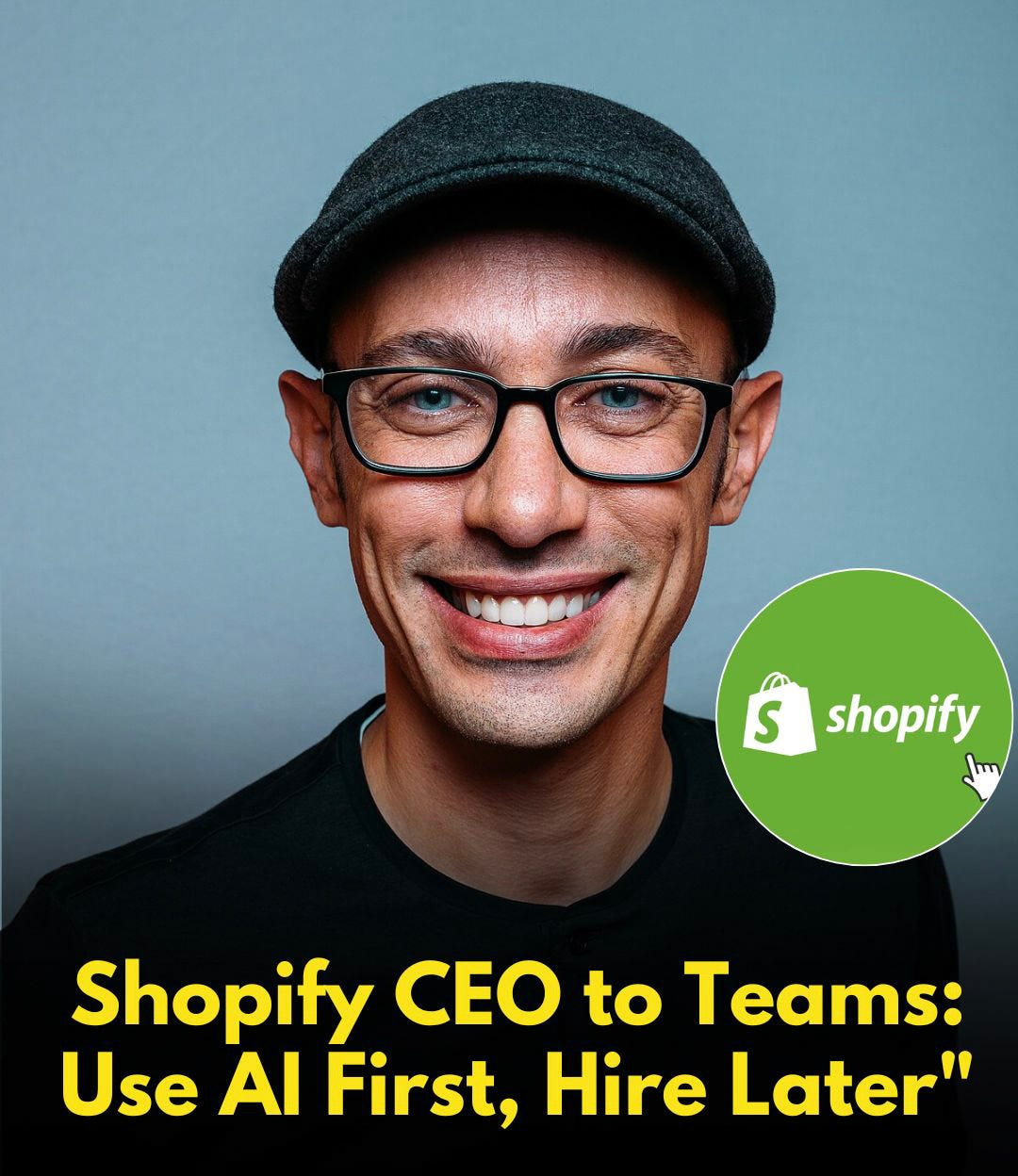
In April 2025, Lütke issued a company-wide memo declaring AI proficiency a core requirement. “Frankly, I don’t think it’s feasible to opt out of learning the skill of applying AI in your craft,” he wrote. “Stagnation is slow-motion failure. If you’re not climbing, you’re sliding.” This directive represented a significant investment in AI at a time when many organisations were still conducting exploratory pilots. Nine months later, the outcomes demonstrate the value of this approach: Shopify achieved substantial gains not through workforce reduction, but through enhanced human capability.
This analysis examines Shopify’s strategy, implementation, and results, providing actionable insights for leaders navigating AI adoption.
Context: Positioning for Sustained Growth
Shopify’s evolution began in 2006 as a basic online store platform and expanded into a comprehensive commerce ecosystem. The post-pandemic era brought challenges, including moderated growth and an expanded workforce from rapid hiring. Between 2022 and 2023, the company reduced its headcount by approximately 20% to align resources with strategic priorities.
By 2025, AI had become essential for competitive advantage. While peers often limited initiatives to committees or trials, Lütke opted for comprehensive integration. The memo established an “AI-first” framework with three key elements:
1. Prioritization of AI Solutions: Teams were required to demonstrate that AI could not perform a task before requesting additional hires or resources.
2. Early Integration in Development: AI incorporation was mandated from the prototype phase in product workflows.
3. Alignment with Performance Evaluation: AI experimentation became a formal component of employee assessments.
This structure positioned AI as an enhancement tool - termed an “AI exoskeleton” -that augmented employee performance rather than displacing it.
Challenge: Achieving Broad Adoption
Effective strategies require rigorous execution. Shopify addressed the difficulty of democratizing AI across diverse roles, from engineering to marketing and support, where many employees lacked technical backgrounds or viewed AI with caution.
The company prioritised accessible tools, such as Gumloop (a no-code automation platform), Cursor (an AI-assisted coding tool), and general-purpose models like ChatGPT, rather than developing proprietary systems.
Chief Revenue Officer Bobby Morrison exemplified leadership in his 3,000-person organisation. During dedicated innovation periods known as “Hack Days,” he encouraged automation of routine tasks, resulting in widespread tool adoption. His guidance,” Build your own personal AI exoskeleton”, - reinforced the empowerment theme.
Integrating AI into performance reviews shifted the culture from optional exploration to expected proficiency, supported by resources to ensure accessibility.
Execution: Comprehensive Organizational Rollout
Implementation was rapid and inclusive. Gumloop usage expanded quickly post-memo:
Over 110 teams participated actively.
Employees created 6,000 distinct workflows for tasks like data processing and customer support routing.
More than 17 million automated actions were completed, yielding significant time savings without security issues.
Customer operations benefited similarly, with AI enabling efficient support scaling. Features driven by AI increased store traffic sevenfold and related orders elevenfold since early 2025.
Shopify focused initially on automating routine processes, fostering confidence and paving the way for broader innovations through a bottom-up methodology.
Outcomes: Measurable Business Impact
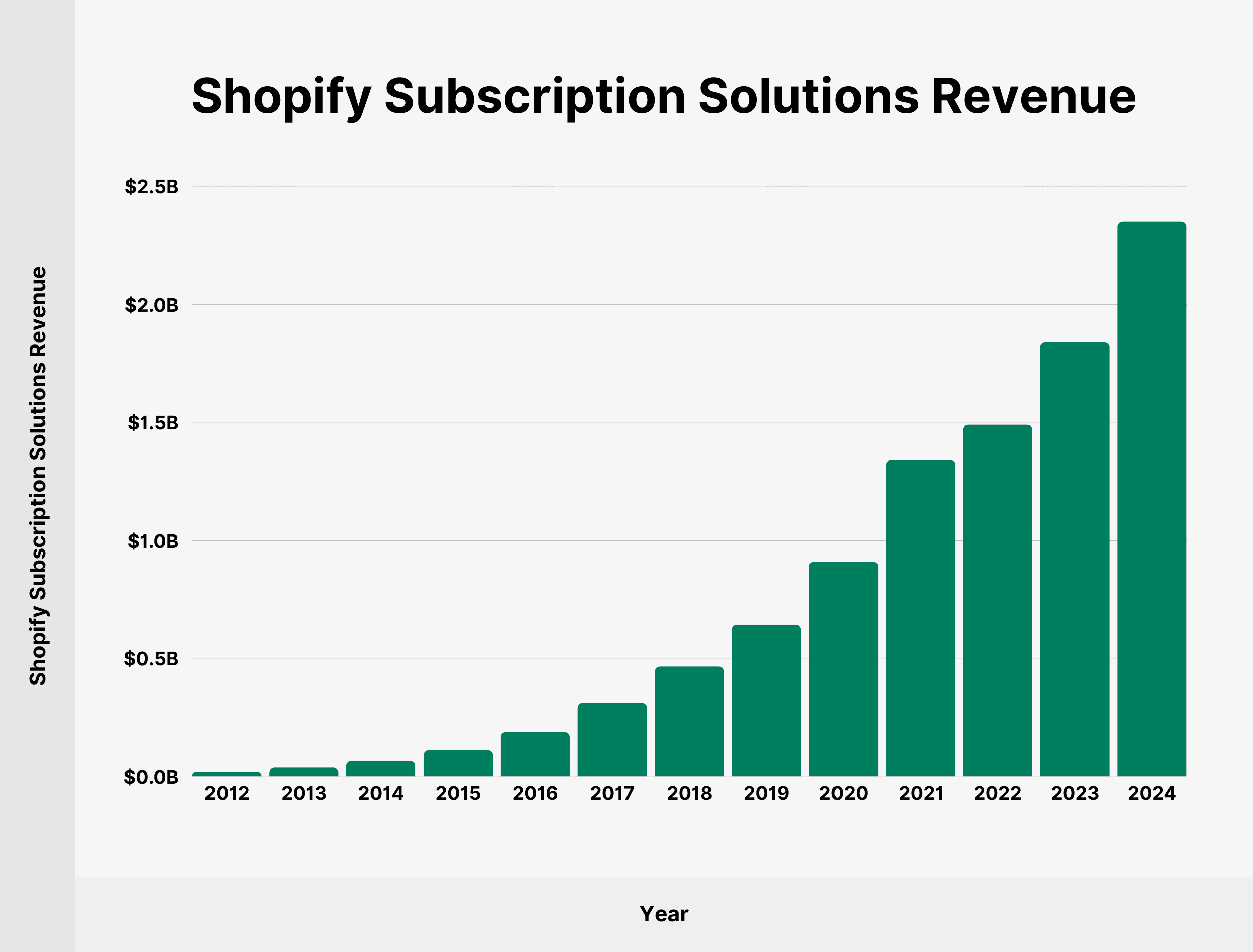
By late 2025, financial results validated the strategy. Q3 earnings reported $2.84 billion in revenue (32% year-over-year growth) and $264 million in profit, with annualized revenue reaching $10.7 billion. Headcount stabilized at approximately 8,100, compared to a 2022 peak of 11,600.
Revenue per employee exceeded $1.3 million - more than double prior levels. This efficiency stemmed from capability amplification of the existing team, following earlier structural adjustments.
Key Insights: A Framework for AI Integration
Shopify’s experience offers a structured approach:
1. Position AI as Enhancement: Emphasize capability expansion to minimize resistance.
2. Select Accessible Tools: Leverage existing platforms to enable participation across skill levels.
3. Integrate into Evaluation Processes: Tie AI proficiency to career development for sustained engagement.
4. Begin with Practical Applications: Target routine tasks to build momentum.
5. Track Relevant Metrics: Monitor adoption rates alongside financial indicators.
In an era of rapid technological advancement, Shopify demonstrates that committed, human-centred AI adoption yields competitive advantages.
Implications for Leadership
Shopify’s initiative, launched in April 2025, positioned the company as a benchmark for AI-driven transformation by early 2026. The result: accelerated revenue growth and a workforce equipped for future demands.
Executives must now consider: How is your organisation preparing for AI proficiency? Are you developing the necessary capabilities today to lead tomorrow?